
My legs stick to the hard, wooden chair as I shift my weight, eyes glued to my Bible as I follow along while my small group reads.
“I will restore to you the years that the swarming locust has eaten, the hopper, the destroyer, and the cutter, my great army, which I sent among you” (Joel 2:25).
I grab my highlighter, ready to color the verse in yellow as we discuss it.
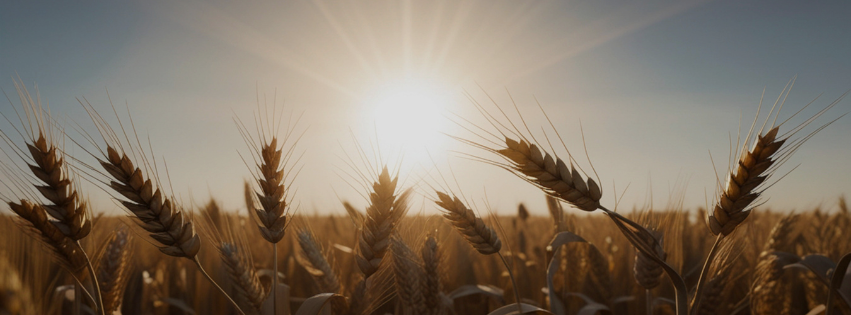
I had never read Joel before. The book opens with farmers watching swarms eat their livelihood in real time. Four kinds of locusts, four waves of destruction. This wasn’t a metaphor for them. It was their reality.
Joel 2:25 really struck me. I know it gets passed around—in cards after “sorry for your loss” and on social media posts after something devastating happens. It’s used as encouragement. God will restore what you’ve lost. But how can He restore a loved one you’ve lost?
Two things stuck in my mind after reading this.
Restoration isn’t a one-time event; it’s an ongoing process.
And once I started thinking about this, I found something else underneath that I’m still trying to understand.
I’m writing this today from inside the process of restoration, not from the other side of it.
Restoration as a Process
Through reading Joel, I’m thinking about restoration for the first time. Most of us assume restoration is an event. A moment. A before-and-after.
We can absorb this from scrolling on social media and seeing someone’s amazing testimony about their restoration: “God healed me in ninety days”, “God restored my marriage”. We see the highlight reel version. We don’t see the difficult journey that led to those moments.
There’s a quieter version of restoration too, while it’s ongoing. It’s the “Why am I still struggling with this?” at 2 am. It’s the “Should I be over this by now?” whispered to ourselves when we wonder if something’s wrong with us. We think there must be a problem with us since our restoration isn’t complete.
What Scripture Says
But Scripture tells us about restoration in quite a few places. Philippians 1:6 says, “He who began a good work in you will carry it on to completion until the day of Christ Jesus.” Notice it doesn’t say “carried”, past-tense.
2 Corinthians 3:18 says, “And we all […] are being transformed into his image with ever-increasing glory.” ARE being transformed. We’re constantly in mid-transformation. The Bible doesn’t describe restoration as a past-tense completed event.
Joel’s original audience were farmers. They knew fields devoured by locusts didn’t recover in a week. They had to plow. Plant. Wait through the seasons. They heard “restore” as a process because they’d lived through agricultural recovery.
Progress IS restoration. The plowing, planting, watering, waiting, harvesting—all of it is restoration.
Mental health stability isn’t usually “cured”. It’s maintained daily. Healing from spiritual abuse isn’t a moment you arrive at. It’s layers peeled off over years.
Both are restoration. The fact that they’re ongoing doesn’t disqualify them.
If you’re struggling with restoration, please know:
You are not behind. You are not failing. You’re not doing it wrong. Setbacks are not evidence that restoration isn’t happening—they’re part of it.
Growth, if you think of it, is mostly invisible until you look back on it.
The reason restoration doesn’t ever feel completed in this life is because we’re not fully restored until Jesus returns.
The Ground That Shouldn’t Have Been Cleared
The theme that keeps repeating in Joel is that God rebuilds on ground the locusts cleared. Sometimes the clearing makes room for something that couldn’t have grown otherwise.
I see this in my own life. ARMR exists because of what was eaten. I wouldn’t have the experience to write what I write if I hadn’t lived what I lived.
But…
What about Maddy?
My cousin, Maddy, was 15 years old when she passed away. Cancer. She died the day after Thanksgiving after fighting for so long. She was just a kid.
Is this the ground being cleared for something better? A child losing her life? How could God possibly restore that?
Sometimes, I have a semblance of peace about it, because I see how it led here. But why did she have to die for any of this to happen? But also, how else could it have happened?
I know some “Christian” responses are normally, “Everything happens for a reason” and “God needed her more.” These are the tidy answers we try to accept. But these “answers” hurt. They treat my family’s grief as a problem to solve rather than a weight to carry.
Job’s Encounter
Job lost everything: his wealth, his kids, his health, everything. Throughout Job, he asks God why. Why him, why this, why now.
In Job 38, God finally responds:
“Where were you when I laid the earth’s foundation?”
To which Job responds, “Surely I spoke of things I did not understand, things too wonderful for me to know” (Job 42:3).
The encounter doesn’t hand Job an answer. It hands him God’s presence, which turns out to be enough.
When I read this, I thought it was beautiful. But I can see how it might land hard for people in fresh grief. While I love this passage, I know this isn’t a passage to hand to someone who just lost a loved one.
What I Hold Onto
God didn’t clear the ground where Maddy died. Cancer did. A broken and fallen world did.
What God does is meet us on ground that was cleared by evil and grow something there anyway.
I’ll never be okay with Maddy’s death, nor all the other loved ones we lost in such a short amount of time. I never will this side of Heaven.
But I still trust Him. Not because I understand Him, but because I know Him. Those are different things.
If you’re looking for an answer to “why does God allow suffering?”, I don’t have one. I’ve wrestled with that question before here, and my pastor is currently preaching through it. But this specific post isn’t trying to answer it.
“Though He slay me, yet will I hope in Him” (Job 13:15).
Honest faith isn’t the faith that understands; it’s the faith that keeps trusting anyway.
What I’m Taking From This
Studying Joel hasn’t given me a tidy theology of suffering and restoration. But it has given me two things I’m holding onto.
First: Restoration isn’t a finish line. It’s underway. Right now. Even when I can’t see it. Even when I feel like I’m failing at it.
Second: The ground that gets cleared away in our lives—not by God but by living in a broken world—is not wasted ground. God grows things there. Not as a trade for what was lost, but as grace that takes nothing away from the grief.
Restoration isn’t an exchange or replacement of everything you’ve lost. It’s a level-up, a new opportunity for new things to grow. The grief? It stays. The new growth coexists with it.
In Isaiah 61:3, Isaiah writes that God sent him to “bestow on them a crown of beauty instead of ashes, the oil of joy instead of mourning.”
Isaiah doesn’t say the ashes never happened. It says beauty is given in place of ashes, meaning the ashes are real, and God exchanges something beautiful for them without pretending it never happened.
The beauty grows from the ashes while the grief remains, but it doesn’t stay the same. It softens. It changes shape. It learns to share space with the new growth instead of consuming everything.
To Those in the Locust Years
First, I’m sorry you’re going through this. Your pain is valid. It might feel like restoration is never coming.
I’m not going to preach at you perfect theology that explains why. Instead, I’ll sit here with you and remind you that you’re allowed to grieve what’s gone AND hope for what’s growing. Both. At the same time.
I will restore to you the years that the swarming locust has eaten.
You never know how far you’ve come until you look back at where you’ve been.
Keep working the ground, plowing and prepping for the new growth the Lord will bless us with.
I’ll see you in the field.